
No Supplemental Draft: Could it have worked?
Forty-six picks since 1977. Every one of them a gamble.

A Legend, A Warning, and an Open Question Named Sorsby
Most NFL fans could not tell you the last time a player was selected in the supplemental draft. The answer is 2019, and the player was a safety out of Washington State named Jalen Thompson who most casual fans would not recognize. But dig a little deeper into the history of this quiet summer draft and you will find Cris Carter, Brian Bosworth, Josh Gordon, and now a name that has been all over football Twitter this offseason.
Unlock an inside edge! NFL33 exists based on reader support, diving deep into NFL team-building, front offices and the NFL Draft.
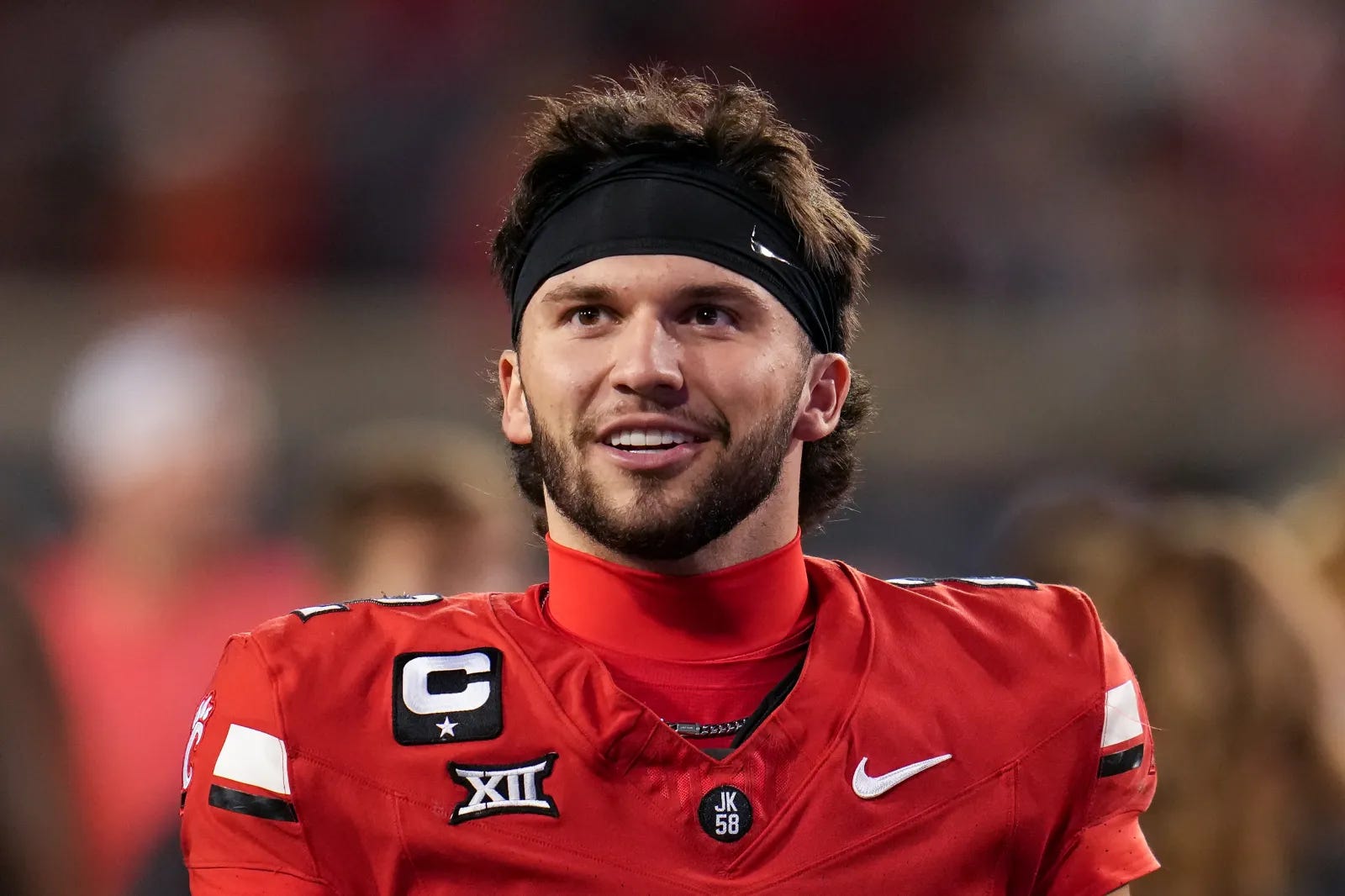
Brendan Sorsby, the 22-year-old quarterback who threw for over 5,600 yards and scored 63 touchdowns across two seasons as a starter at Cincinnati, was declared permanently ineligible by the NCAA this spring after admitting to placing thousands of bets on college sports, including on his own team. With his college career over, the supplemental draft was a possibility. That didn’t happen, but the question remains: could it have worked?
The supplemental draft does not make the front page very often. When it does, it is always worth paying attention.
So What Even Is the Supplemental Draft?
The supplemental draft has existed since 1977, born out of a simple problem: what do you do with players who become eligible for the NFL after the regular draft has already happened?
The circumstances vary. Academic ineligibility. Disciplinary suspensions. Missed declaration deadlines. Whatever the reason, these are players who didn’t fit neatly into the April calendar, and the supplemental draft exists as a pressure valve for exactly that situation.
Here’s how it works. Teams submit silent bids on available players — not in the form of money, but in the form of future draft picks. If you want a player badly enough to bid your second-round pick next year, you submit it. The team that bids the highest pick wins the player’s rights — and forfeits that corresponding pick in the following year’s regular draft. It’s an expensive gamble by design, which is exactly why it goes unused most years.
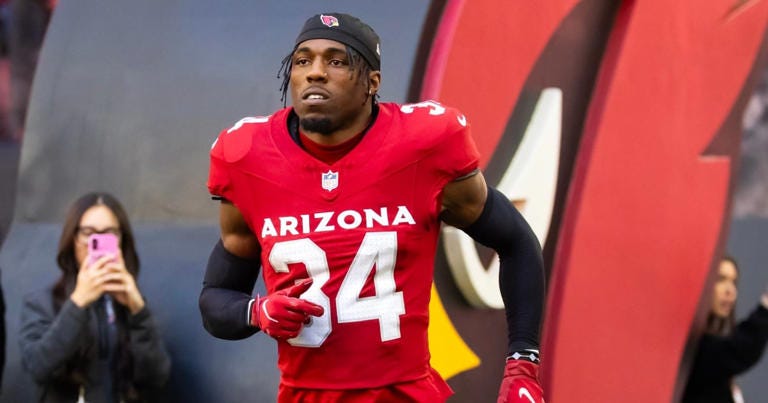
In fact, only 46 players have ever been selected in the supplemental draft since its inception. The last one was in 2019, when the Arizona Cardinals used a fifth-round pick on safety Jalen Thompson out of Washington State. Nobody has been selected since. The draft technically happens every summer — it just rarely produces any picks.
Which makes the players who came out of it all the more interesting…
The Greatest Hit: Cris Carter
If you know one thing about the supplemental draft, it should be this: the only player it has ever sent to the Pro Football Hall of Fame was claimed off waivers for $100.
Cris Carter’s path to Canton is one of the stranger stories in NFL history. He was a wide receiver at Ohio State — brilliant, electric, clearly destined for the league. But before his senior season, it came out that he had secretly signed with an agent, a violation of NCAA rules. Ohio State declared him ineligible. The Eagles selected him in the fourth round of the 1987 supplemental draft.
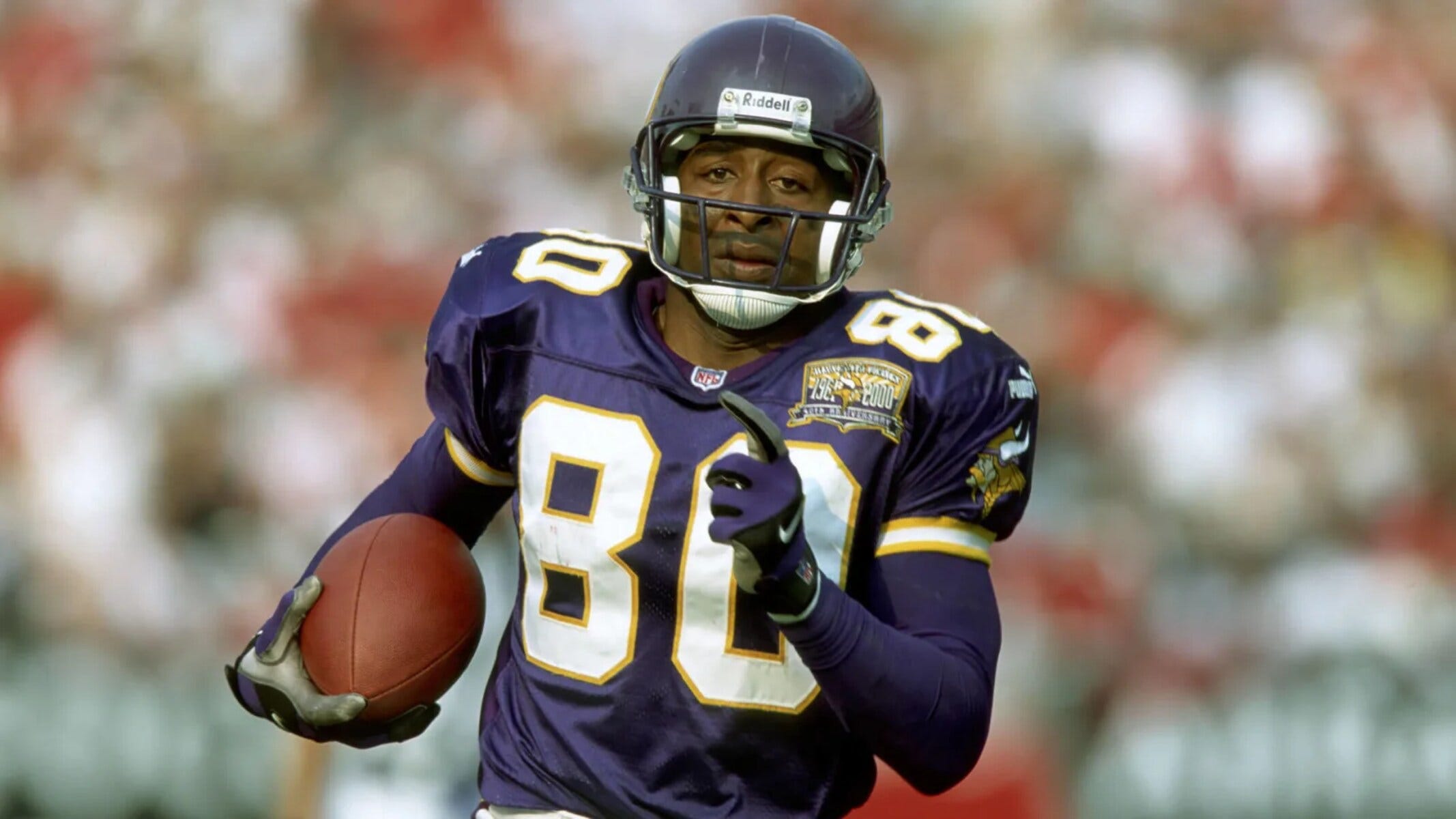
His first three years in Philadelphia were promising but turbulent. Off-field issues led coach Buddy Ryan to cut him before the 1990 season. Ryan’s infamous assessment: “All he does is catch touchdowns” — delivered as a criticism, which tells you everything you need to know about how badly that situation was misread.
The Minnesota Vikings claimed him off waivers. The price was $100.
What followed is one of the great redemption arcs in professional sports. Carter got sober, found his faith, and became the most complete receiver of his generation. He caught 122 passes in back-to-back seasons. He led the NFL in touchdown receptions three times. He made eight consecutive Pro Bowls. By the time he retired after the 2002 season, he had 1,101 receptions for 13,899 yards and 130 touchdowns — numbers that at the time made him the second most prolific receiver in NFL history.
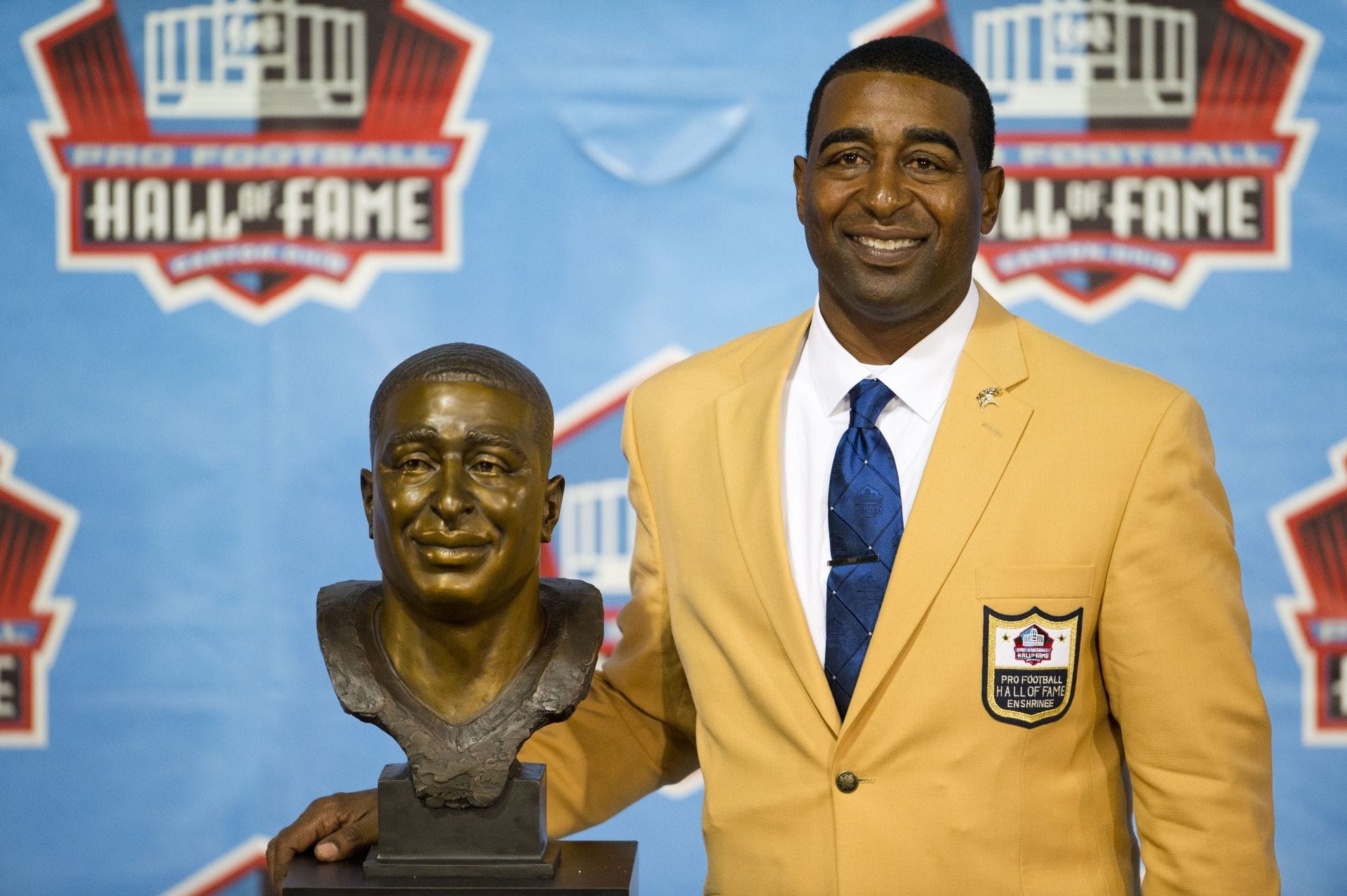
He was inducted into the Pro Football Hall of Fame in 2013. The Eagles spent a fourth-round pick. The Vikings spent a hundred dollars. You do the math.
The Rest of the Mount Rushmore
Carter is the headliner, but the supplemental draft’s supporting cast is more impressive than most fans realize.
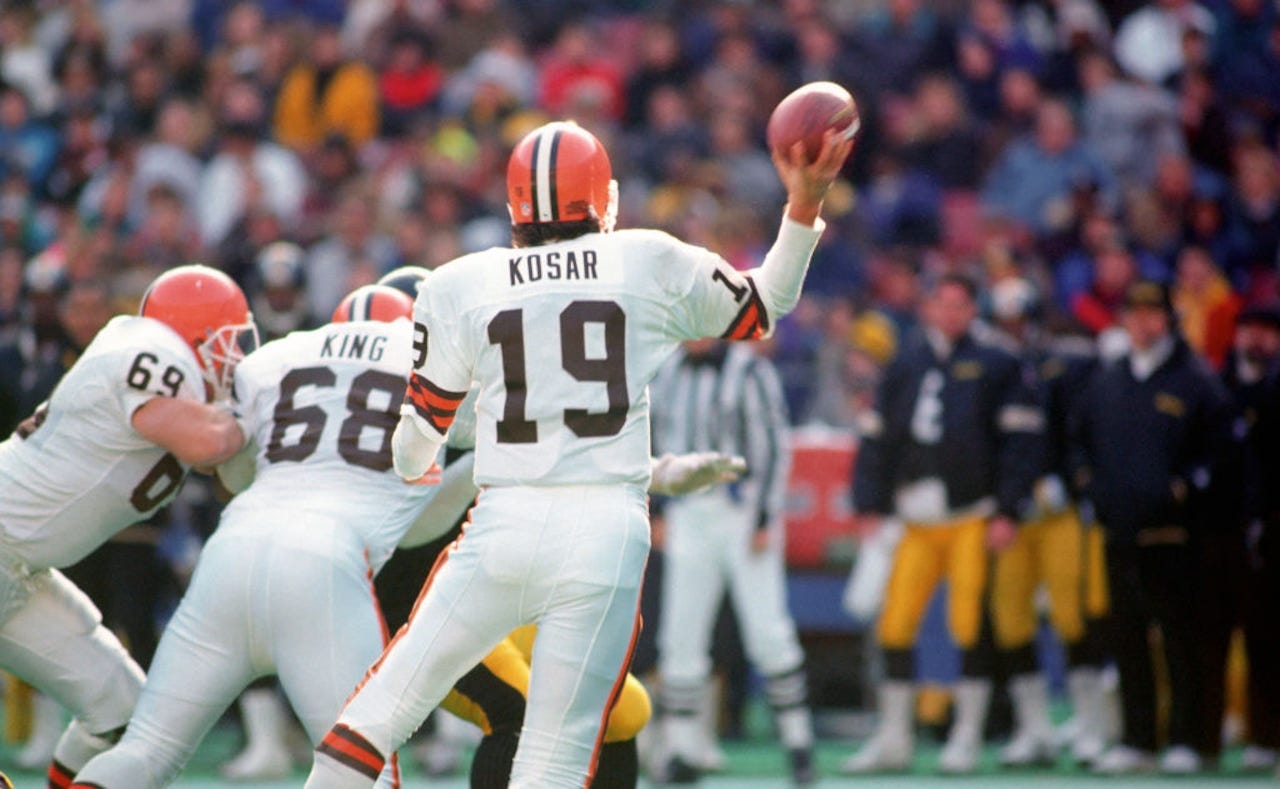
Bernie Kosar is the most beloved supplemental pick in Cleveland sports history, which is saying something given Cleveland’s complicated relationship with sports love. He graduated early from the University of Miami with a double major in finance and economics, deliberately engineering his situation so he could enter the supplemental draft and be selected by the Browns, the team he grew up rooting for. Cleveland surrendered their 1986 first-round pick to get him. He rewarded them with nine seasons, three AFC Championship Game appearances, and the kind of loyalty that cities build statues for. His playoff record of 489 passing yards against the Jets in 1986 stood for decades. He never won a Super Bowl in Cleveland, but he won something harder to quantify — he became the city.
Rob Moore was the first overall pick of the 1990 supplemental draft, taken by the New York Jets out of Syracuse after graduating early. He spent five quietly productive seasons in New York before signing with the Arizona Cardinals in 1995, where he absolutely erupted. In 1997 he led the entire NFL in receiving yards with 1,584 — a staggering number for a Cardinals offense that was not exactly striking fear into defenses. He made two Pro Bowls, earned a first-team All-Pro nod, and finished his career with 628 receptions for 9,368 yards. He currently coaches wide receivers in the NFL, which feels appropriate.
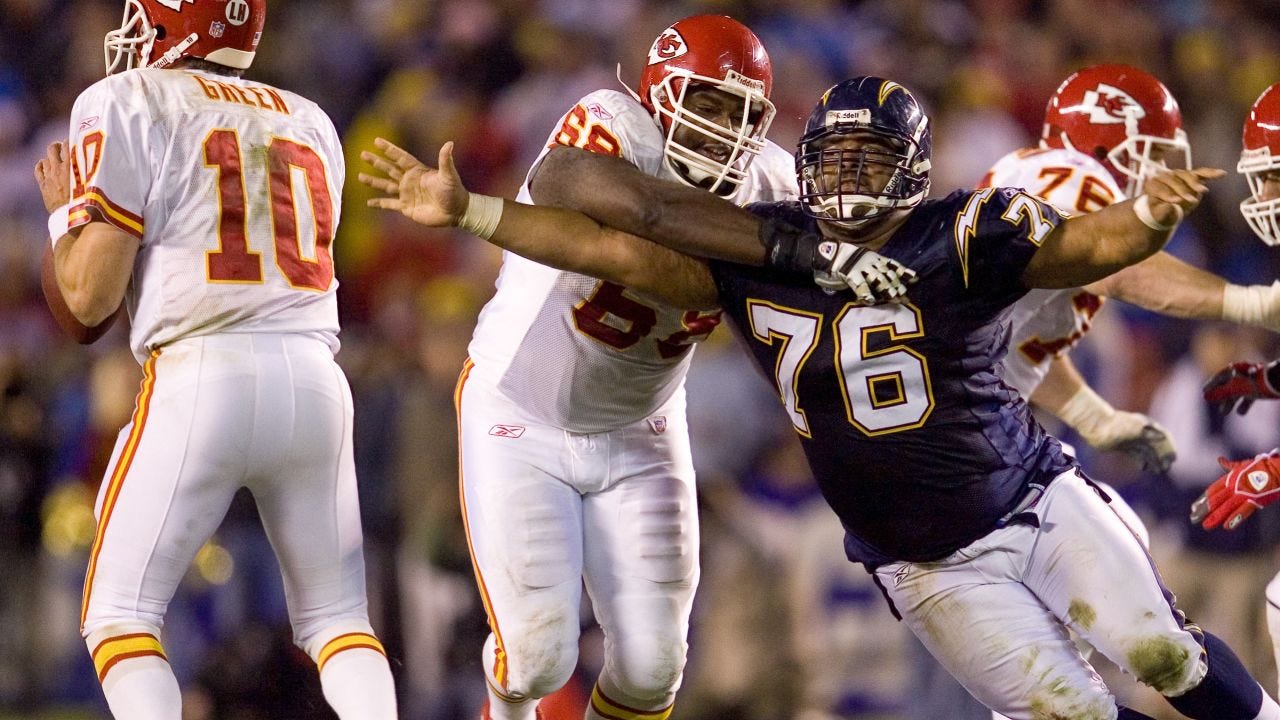
Jamal Williams might be the most underrated player on this entire list. The nose tackle out of Oklahoma State was declared academically ineligible before his senior season and entered the 1998 supplemental draft, where the San Diego Chargers grabbed him in the second round. He spent twelve seasons as the immovable anchor of San Diego’s defensive line — three Pro Bowls, three All-Pro selections, and the kind of unglamorous dominance that only people who really watch football appreciate. He was named to the Chargers’ 50th Anniversary Team. He is almost certainly better than you remember.
Ahmad Brooks got the biggest contract of any supplemental pick in history, a six-year, $44.5 million extension from the San Francisco 49ers in 2012. He earned it. After entering the 2006 supplemental draft following his dismissal from Virginia, Brooks spent eleven seasons in the league, recording 55 career sacks, making a Pro Bowl, and earning two AP All-Pro second-team selections. He played in Super Bowl XLVII. His contract at $7.4 million per year reflected what a legitimate, high-end pass rusher was worth — and he was one.
The Biggest Bust and the Biggest What-If
No discussion of the supplemental draft is complete without Brian Bosworth and Josh Gordon. One is the cautionary tale about hype outrunning reality. The other is something more complicated and more painful.
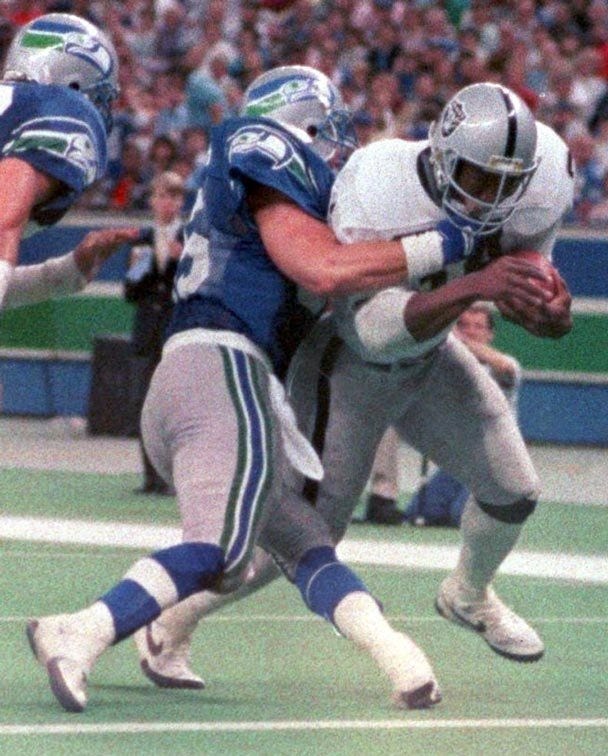
Bosworth was the most famous college linebacker in America when he entered the 1987 supplemental draft. Two-time Butkus Award winner. Larger-than-life personality. The Seattle Seahawks surrendered a first-round pick to get him and paid him a then-record contract. Then Bo Jackson ran through him on Monday Night Football in one of the most replayed moments in NFL history, and a shoulder injury ended his career after just 24 games. The Boz became a punchline. It wasn’t entirely fair — he was genuinely talented — but the gap between the legend and the reality was vast enough that the story has never quite recovered.
Josh Gordon is different. Gordon’s situation doesn’t inspire jokes. It inspires something closer to disbelief.
In 2013, playing for a Cleveland Browns team that finished 4-12, Gordon led the entire NFL in receiving yards with 1,646 — in only 14 games, having missed the first two due to suspension. He became the first receiver in NFL history to have back-to-back games with 200-plus receiving yards. He was a first-team All-Pro. He was 22 years old and looked like one of the best receivers the league had ever seen.
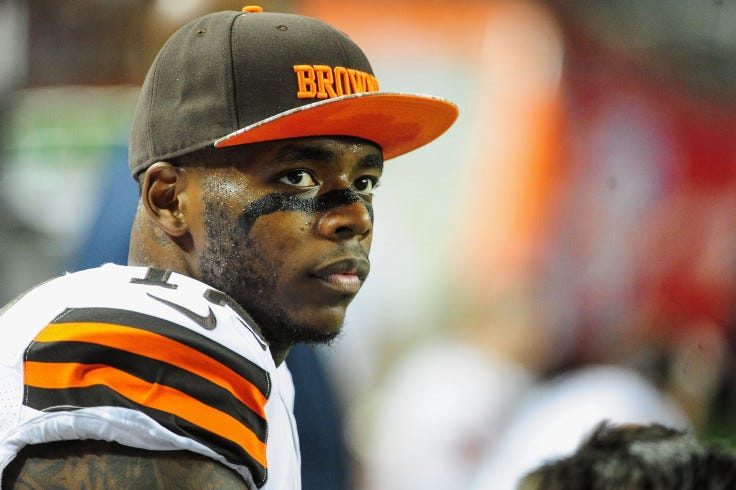
What followed is hard to tell in 2026 without acknowledging how much the context has shifted. Gordon’s suspensions stemmed primarily from marijuana use — a substance the NFL itself has since dramatically softened its stance on, eliminating player suspensions entirely in 2020, with Travis Kelce estimating that between 50 and 80 percent of players currently use it. What got Gordon suspended repeatedly a decade ago would barely register as a violation under today’s rules. He won a Super Bowl ring with the Patriots in 2019, a quiet footnote to a story that should have been so much louder. He finished with 252 receptions for 4,284 yards — numbers that represent a fraction of what this league cost itself by enforcing a policy it has since largely abandoned.
The supplemental draft gave Gordon his shot. The league’s own rulebook took it away.
The Weird and the Wonderful
The supplemental draft has a talent for producing stories that don’t fit neatly into any category.
Terrelle Pryor entered the 2011 supplemental draft under a cloud — suspended from Ohio State as part of the NCAA investigation into improper benefits, the same scandal that cost Jim Tressel his job. The Raiders took him in the third round as a quarterback. He had modest success under center, then did something almost no player in NFL history has done: he reinvented himself as a wide receiver. In 2016 with the Cleveland Browns, he caught 77 passes for 1,007 receiving yards. He became only the second player in NFL history to record both a 1,000-yard passing season and a 1,000-yard receiving season at different points in his career. It’s the kind of footnote that deserves more attention than it gets.
Unlock an inside edge! NFL33 exists based on reader support, diving deep into NFL team-building, front offices and the NFL Draft.
Timm Rosenbach was supposed to be the Phoenix Cardinals’ franchise quarterback. He entered the 1989 supplemental draft after missing the regular deadline, was taken in the first round, and showed genuine promise in his first two seasons as a starter. Then in 1993, at 27 years old, he walked away from football entirely, citing the physical violence of the game, and went to play professional soccer. It remains one of the more quietly fascinating exits in NFL history.
Steve Walsh won a national championship at Miami, entered the 1989 supplemental draft, was taken by the Dallas Cowboys in the first round — and then lost his starting job to a rookie named Troy Aikman. He spent eight seasons as a journeyman backup, competent and mostly anonymous, a career defined almost entirely by the guy who beat him out.
Brendan Sorsby and What Comes Next
The supplemental draft rewards patience in a way that the regular April draft simply does not, because the players who come through it almost always carry more context, more complication, and more story than a standard prospect.
Sorsby is no different. The takes are already hot. The discourse is already exhausting. A 22-year-old quarterback who by most scouting accounts has genuine first-round talent is entering the NFL carrying a gambling scandal, a rehab stint, and enough legal drama to fill a documentary. It is a lot. It is also about two weeks worth of information about a person who has an entire career ahead of him to define himself on a football field.
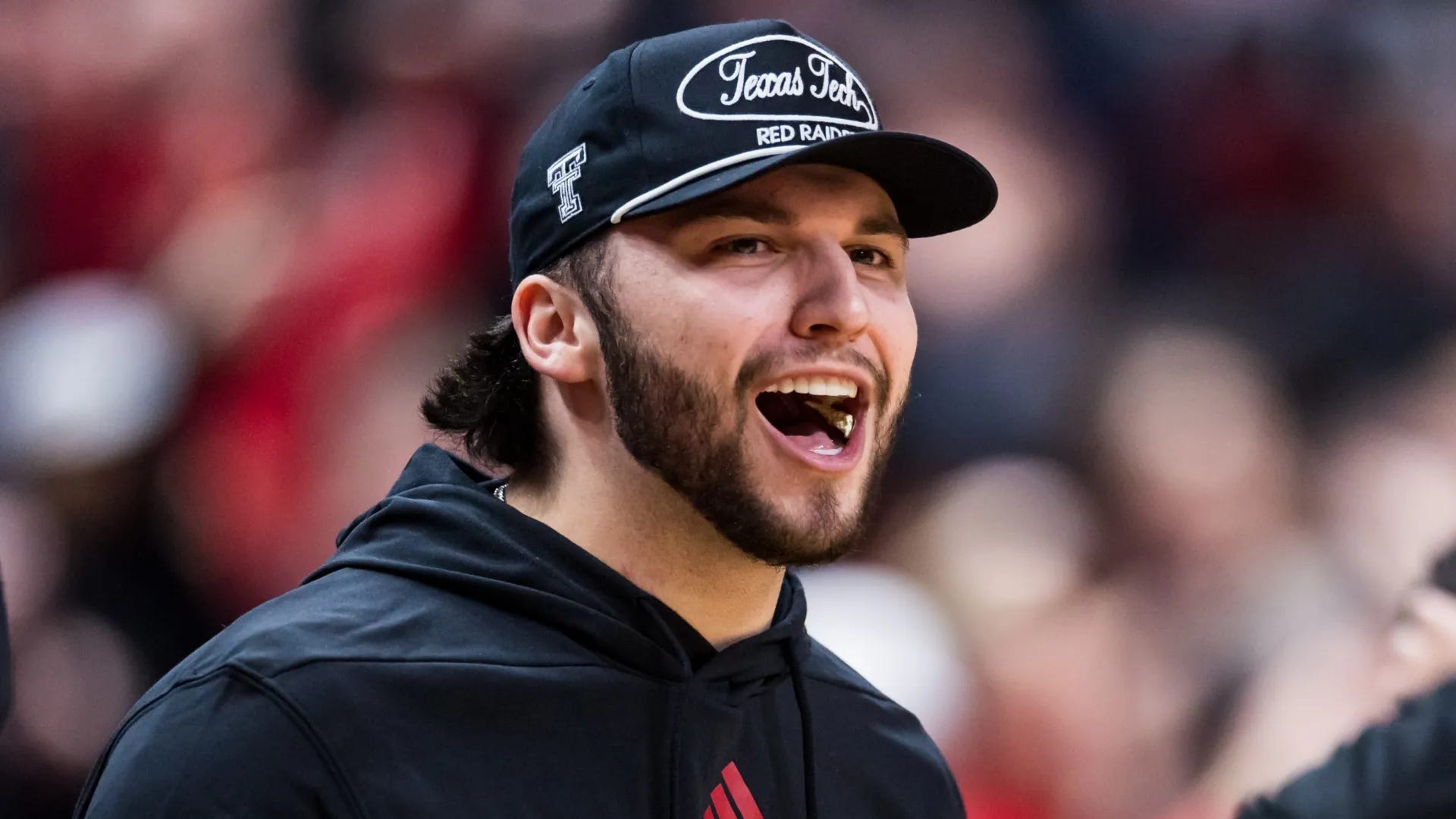
The supplemental draft has always been about context. Cris Carter was not just a receiver who got cut. Brian Bosworth was not just a bust. Josh Gordon was not just a cautionary tale. Every one of those narratives flattened something real and complicated into something easier to say at a bar. Sorsby won’t have the same path, but deserves the same resistance to easy narrative that those players deserved and mostly did not get.
Give it two years. Watch the tape. Let the kid play football. The supplemental draft has never told the same story twice and it is not about to start now
A quick note on sourcing — all career stats pulled from Pro Football Reference, Wikipedia’s complete supplemental draft pick list, and NFL.com. Contract figures for pre-2000 players are era-adjusted estimates from public reporting.