
From Draft Rooms to Timelines
How Draft Twitter reshaped how we evaluate players

The difference between NFL teams and Draft Twitter is no longer access to information. It is how risk is managed. And that difference explains why both sides keep getting different parts of the draft right and wrong.
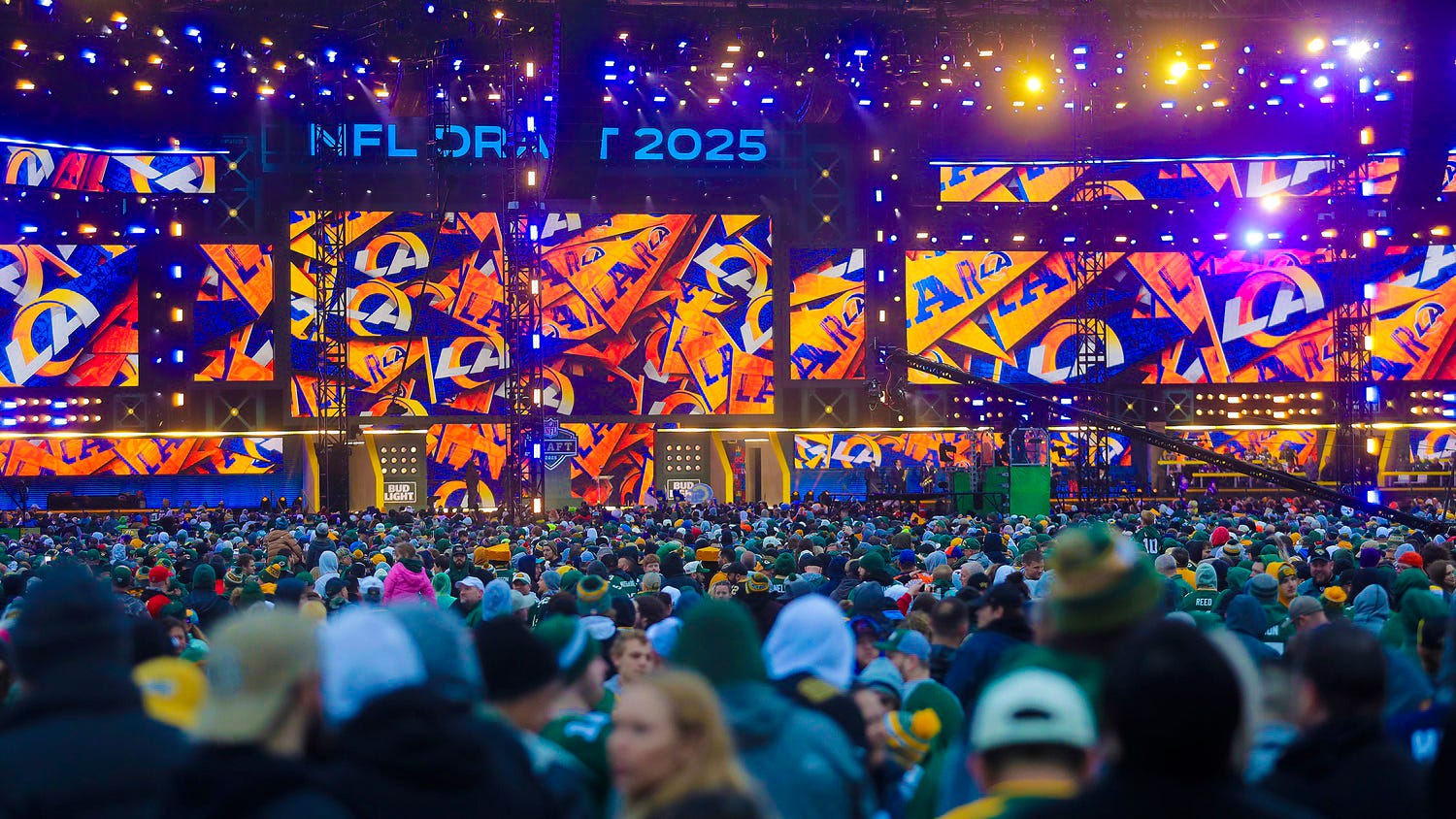
Collapse of Information Advantage
For most of the NFL’s history, the draft was defined by information asymmetry. Teams controlled access to film, proprietary scouting reports, and internal data, while public evaluation was filtered through broadcast clips, box scores, and secondhand reporting. The gap between what teams knew and what the public could reasonably analyze was not small. It was structural.
That gap has narrowed significantly over the past decade.
Full-game film is now more accessible, whether through broadcast archives, coaching cut-ups, or league-supported platforms. At the same time, the growth of public data ecosystems has lowered the barrier to entry for meaningful analysis. Platforms like Pro Football Focus have standardized grading and charting, while tools such as nflfastR have made play-by-play modeling and efficiency metrics broadly available. What once required internal infrastructure can now be replicated, at least in part, by independent analysts with time and technical skill.
Just as important, interpretation is no longer centralized. Analysts publishing on social media, Substack, and independent sites now build draft models, share film breakdowns, and challenge consensus evaluations in real time. Information is not only more accessible. It is actively contested.
